



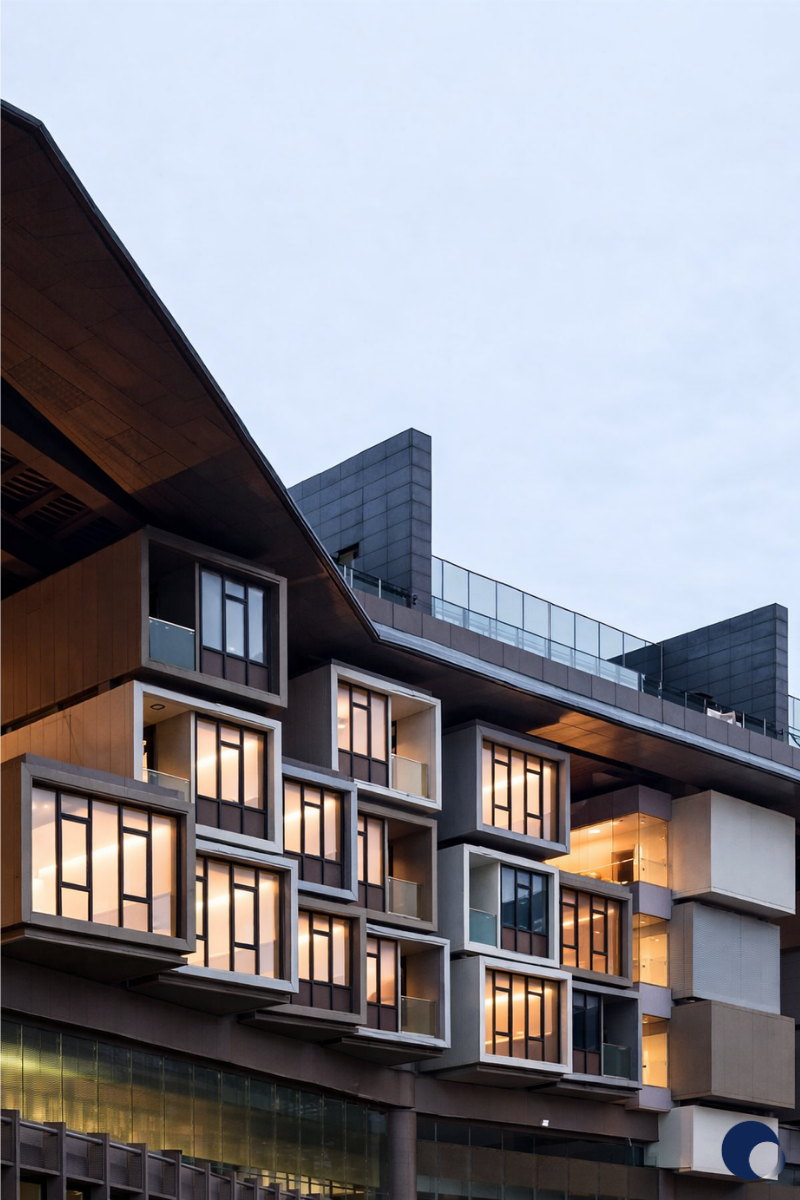
The Museum Hotel Antakya is located on an approximately twenty-thousand-square-meter site in the center of Antakya—formerly known as Antioch—which, according to ancient sources, was the fourth largest city in the world during the Roman Empire. The hotel is situated close to the Church of St. Pierre, one of the most important pilgrimage sites in the Christian world.
During the drilling excavations initiated at the end of 2009 by the investor—who owned the land and had previously commissioned another architectural group to design a hotel project—various archaeological findings were encountered on the site. Consequently, the Cultural and Natural Heritage Preservation Board (KVTVKK) requested that a scientific excavation be conducted in the area.
Excavations carried out under the supervision of a scientific committee composed of archaeologists, art historians, restorers, and architects revealed highly significant archaeological layers from different historical periods across a large portion of the site. It soon became clear that constructing the existing hotel project was impossible. EAA’s involvement in the project began at this stage, following the recommendation and invitation of several academics forming the scientific committee.
The importance, nature, and constraints of the findings—covering nearly the entire site—created tension with the relatively inflexible requirements of a hotel program. This tension became the primary determinant of both the conceptual and physical framework of the project. While it led to an approach that overturned conventional hotel typologies, it also introduced the idea of a public museum to accompany the restoration of the findings. Thus, a unique building program emerged, allowing different social groups to coexist on the same site and reinforcing the possibility of private and public uses functioning together harmoniously.
Through intensive coordination with expert teams, the archaeological structures—some of which had not yet been fully uncovered—were documented in detail. Strong composite structural columns were positioned at points where no archaeological remains were present and within the open space formed by the stream bed running through the center of the site. A protective roof structure was then designed to be placed approximately twenty-five meters above the archaeological level, covering the entire area.
Functions typically located on the ground floor of a hotel—such as restaurants, ballrooms, nightclubs, fitness areas, and swimming pools—were arranged at this upper roof level, together with open courtyards and landscaped areas, frequently found in Antakya’s traditional architectural culture. Approximately fifteen meters above the ruins, a structural grid system composed of steel beams was constructed.
Prefabricated room units, entirely produced off-site, were lifted by cranes and placed onto this structural system, leaving gaps between them. One level below, approximately ten meters above the ruins, the hotel lobby and various seating areas were designed. The fluid and permeable plan approach maintained on all levels ensures that the archaeological site below remains visible from different points within the hotel.
The level just a few meters above the ruins was designed as an archaeology museum and an archaeological park, easily accessible from Kurtuluş Street—the main route from the city. This allowed the site to be genuinely opened to public use. Accordingly, a circulation route composed of suspended ramps and bridges, arranged in response to the positions of the remains, enables visitors to closely observe the ruins without physically touching them.
With all these characteristics, The Museum Hotel Antakya emerged as a unique, site-specific structure that fully utilizes the opportunities and potentials of its context. Positively impacting its geographical setting was the primary objective observed throughout the entire design process.
The importance, nature, and constraints of the findings covering nearly the entire site, together with the tension created by a relatively inflexible hotel program, became the main determinant of both the conceptual and subsequently the physical framework of the project.
Content: Tasarım Group
