


At the heart of the 44-hectare “Uogu Slenis” campus, surrounded by Lithuania’s vast birch and pine forests, rises a special structure that nurtures children’s imagination and curiosity. This kindergarten is not just an educational building; it was designed as a “micro-universe” within nature that supports children’s exploration and learning processes. The project offers a compelling example of how architecture can directly contribute to child development.
Exterior Architecture & Environmental Integration
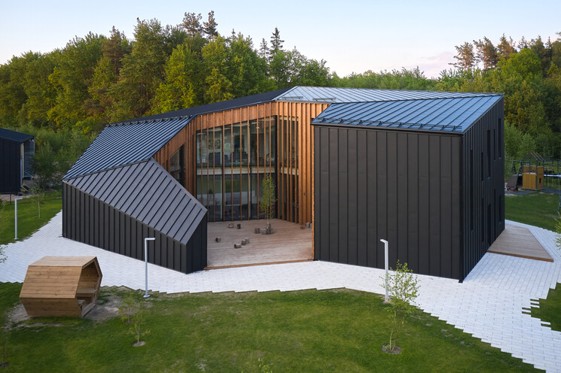
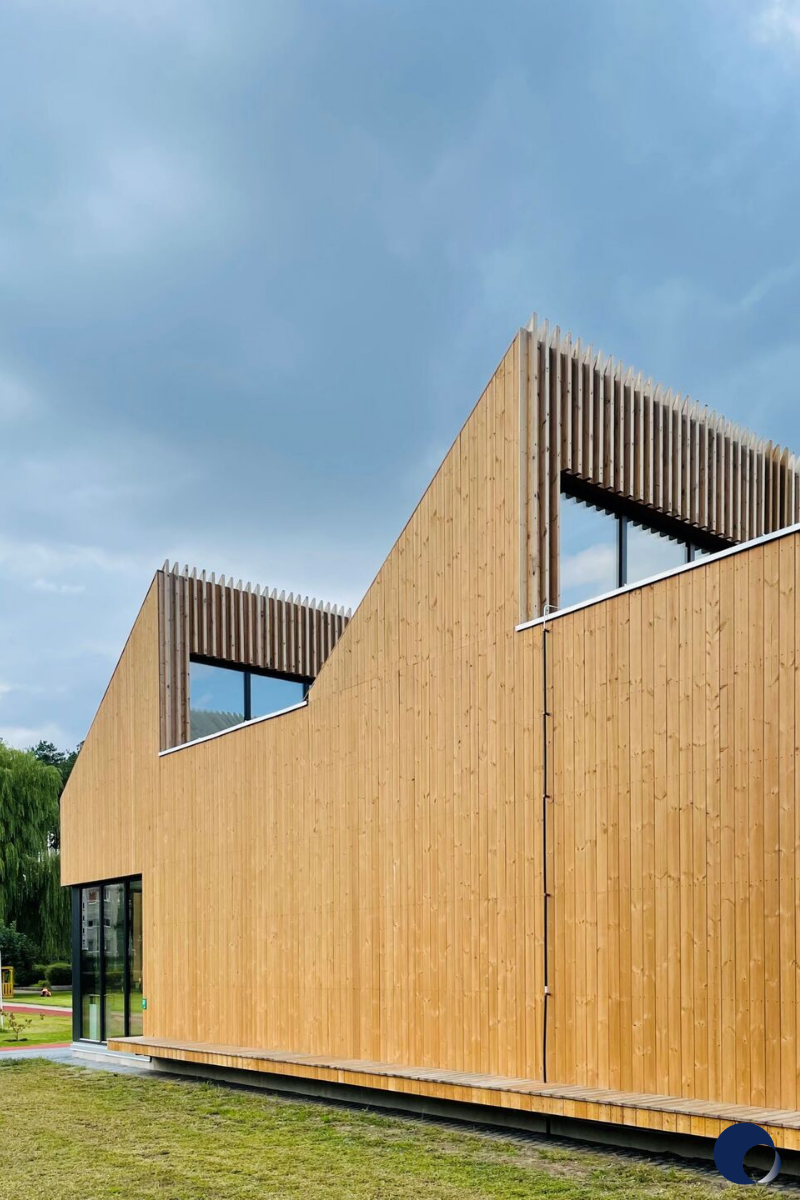
The building’s dynamic massing and dark exterior cladding create a sharp contrast with the lighter tones of the surrounding Baltic forests. This dramatic appearance is softened by tall, narrow, floor-to-ceiling windows. These openings transform the outside world into a giant living picture for children while establishing a seamless connection between interior spaces and nature. Integrated green areas around the building further strengthen students’ contact with the natural environment.
Inner Courtyard: A Play of Perspective
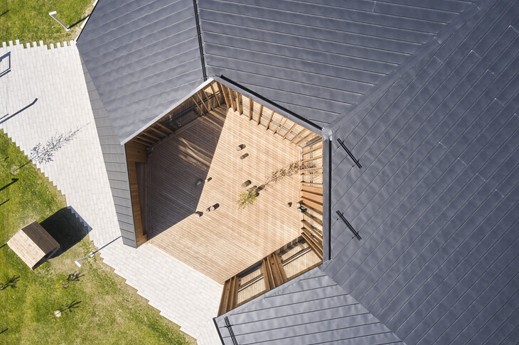
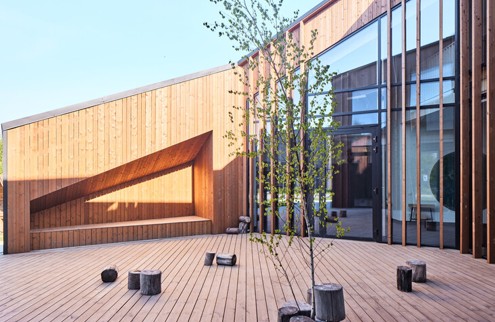
Located at the heart of the structure, the inner courtyard serves as a central gathering space for both children and adults. While it appears as a simple hexagonal form from an adult’s perspective, it becomes a space for play and discovery for children. This shift in perspective highlights the flexibility and multi-layered use of the space.
Materials & Comfort
- Wooden Flooring: Locally sourced wood provides a natural, soft surface, allowing children to move safely and comfortably.
- Climate Control: Sunshades in the courtyard protect children from harsh sunlight while supporting comfortable outdoor learning and play. Shaded areas maintain consistent comfort throughout the day despite changing sun conditions.
Functional Design & Classroom Layout
Spanning a total of 557 m², the building is organized into seven different classrooms. The design balances privacy and focus through thoughtful details:
- Age-Specific Spaces: Two classrooms designed for the youngest age group offer a caring, safe, and supportive environment.
- Independent Entrances: Separate entrances for these two classrooms ensure calm, quiet learning areas, isolated from the movement and noise of the rest of the school.
Conclusion & Architectural Contribution
Uogu Slenis Kindergarten clearly demonstrates the impact of architecture on child development and educational experience. Behind its dark exterior shell lies a bright and warm interior that creates a strong and inspiring foundation for children’s future learning journeys. By bringing together nature, safety, and creativity, the design philosophy offers an environment where children can explore freely and grow with confidence.