


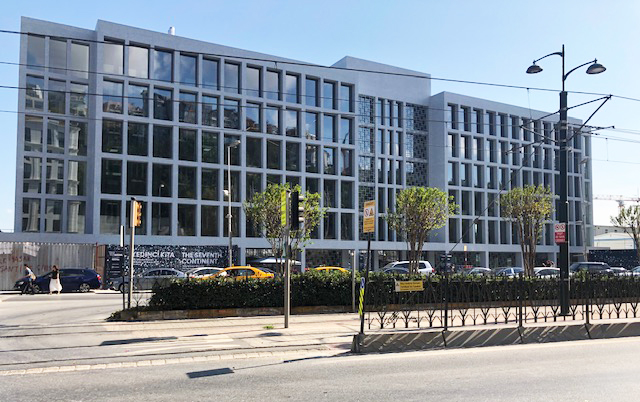
Warehouse No. 5, located in the Karaköy port district, was allocated in 2012 to Mimar Sinan Fine Arts University with the intention of being transformed into the Istanbul Painting and Sculpture Museum. Thus, on the one hand, an area situated in the city center and in a significant location—yet lacking almost any social permeability—was opened up for public use; on the other hand, the groundwork was laid for the creation of a distinctive and high-quality museum building that would house thousands of valuable works, including significant examples of modern Turkish painting from the late Ottoman period to the present day.
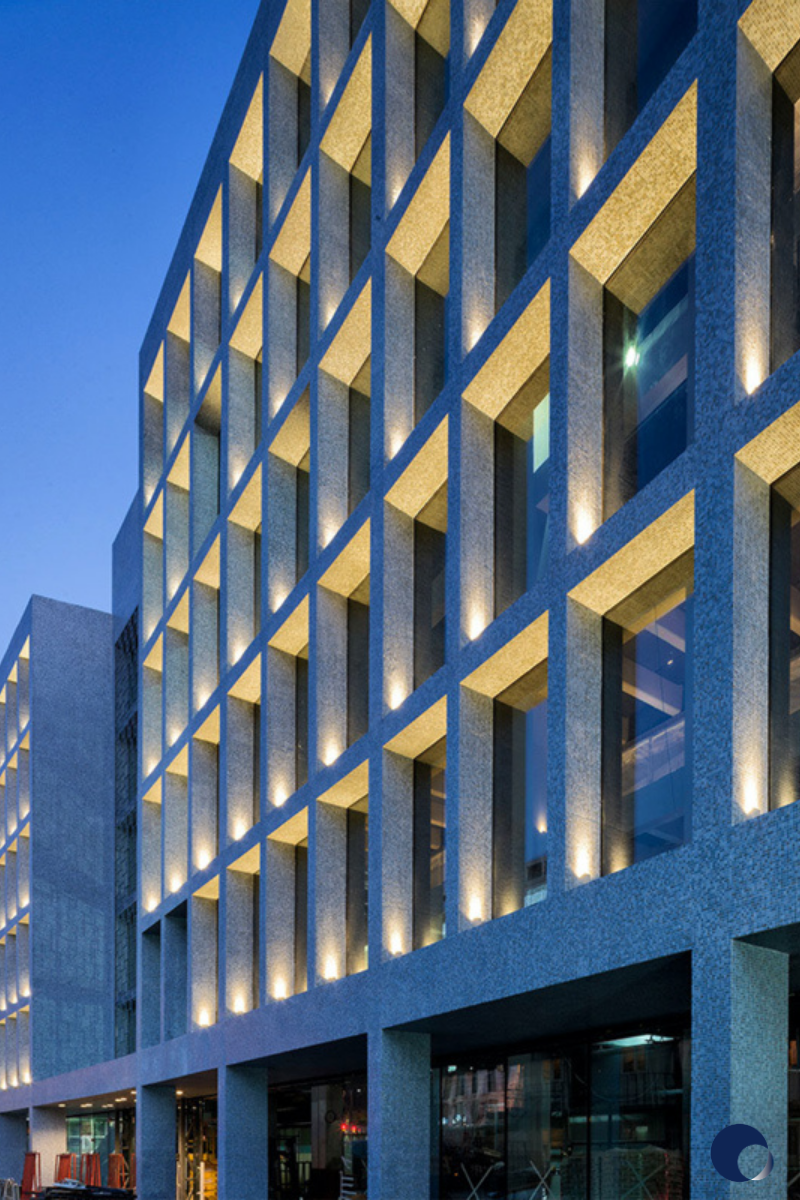
During the initial phase of the design process at EAA, conceptual exercises were conducted to examine the physical and sociological characteristics of the area throughout its history. In this context, emphasis was placed on the district’s identity, which had long been differentiated from other parts of the city as an industrial and port zone, as well as on the specific sense of place formed in the collective visual memory by the warehouse and office masses that have existed in the area since the late 1950s. The importance of preserving these structures—characterized by their distinctive scale and structural elements—was highlighted. In particular, maintaining the repetitive and orderly surface geometry of the reinforced concrete grid, which stands out as one of the most notable structural features of the warehouse buildings, emerged as one of the primary objectives of the design. It was planned to largely preserve the existing reinforced concrete structural system, while removing the walls and floor slabs in order to obtain a three-dimensional grid framework within which the galleries of the new museum could be inserted.
From a museological perspective, it was envisaged that the artworks would be categorized according to varying curatorial approaches across different periods, evaluated in relation to the characteristics of the spaces, grouped accordingly, and distributed throughout the galleries. The circulation route was designed to allow for variable trajectories based on different exhibition scenarios.
The transparent surface that encloses and protects the building from external effects was addressed not through a conventional solution based on standard frame-and-glass relationships, but through a distinctive system that makes reference to the structure’s industrial past. Galleries, sometimes allowing transitions between one another and at other times arranged as individual sections, were interconnected by new paths and bridges. In this way, intermediate spaces offering surprising perspectives between galleries were created, enabling visitors to establish a pure and focused relationship with the artworks in a controlled environment, while also engaging with the city in the spaces between galleries.
The transparent surface that envelops and protects the building from external influences was conceived not as a conventional solution developed through standard frame-and-glass relationships, but as a distinctive system that also references the structure’s industrial past.
Content: Tasarım Group
