



Designed under the leadership of Russian architect Ivan Nikolaev in 1933, the Kayseri Sümerbank Textile Factory is one of the most important symbols of the industrialization and modernization movement of the early Republican era. The complex, which includes original examples of Russian Constructivism, remained largely neglected after its closure in 1999 and until its allocation to Abdullah Gül University. Moreover, in some parts of the buildings, unregulated repairs and additions were carried out during this period.
Once a generator of the city’s economic and social life in Kayseri, and therefore holding a strong place in the collective memory of the city, the main goals of the design emerged as transforming this campus into a contemporary university environment where modern educational methods are applied, while also reopening a large part of the site for public use, turning it into a long-missing social center.
The guiding principle of the transformation decisions was defined as avoiding both extremes: neither preserving the buildings as untouchable objects, nor excessively intervening in a way that would destroy their existing character, thus achieving an original adaptive reuse project.
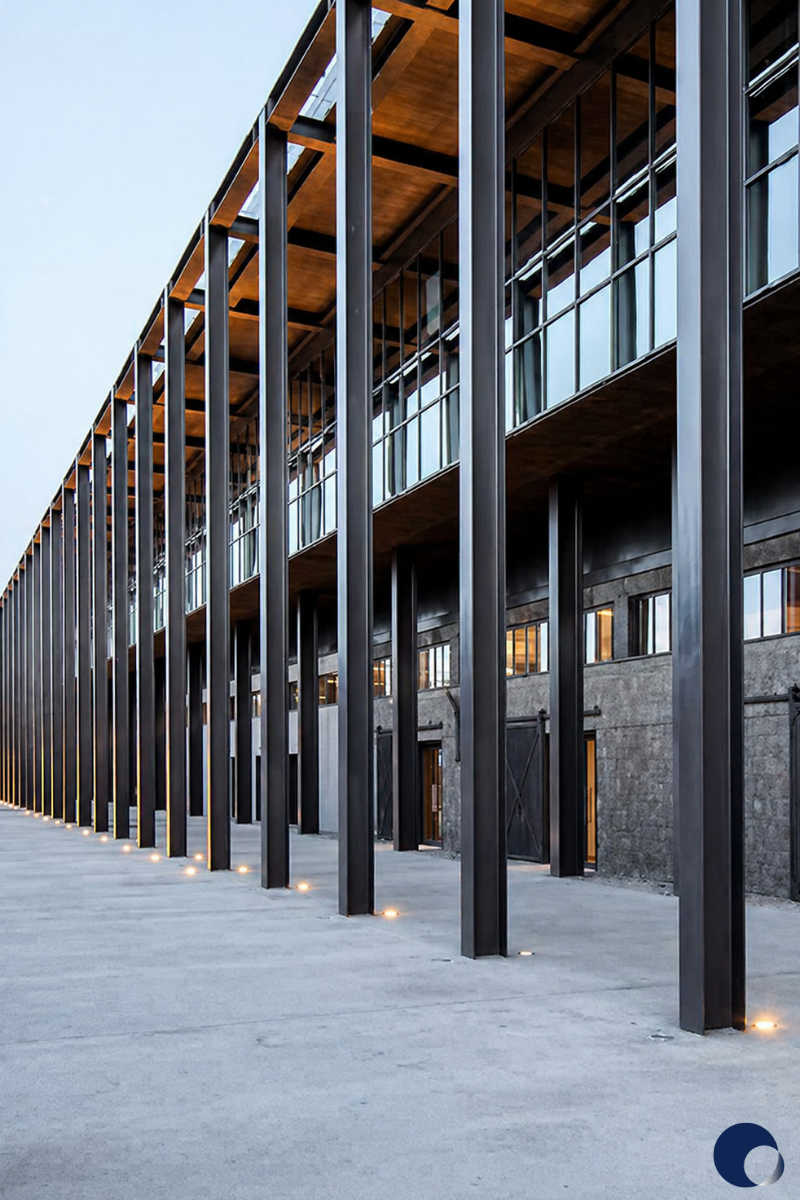
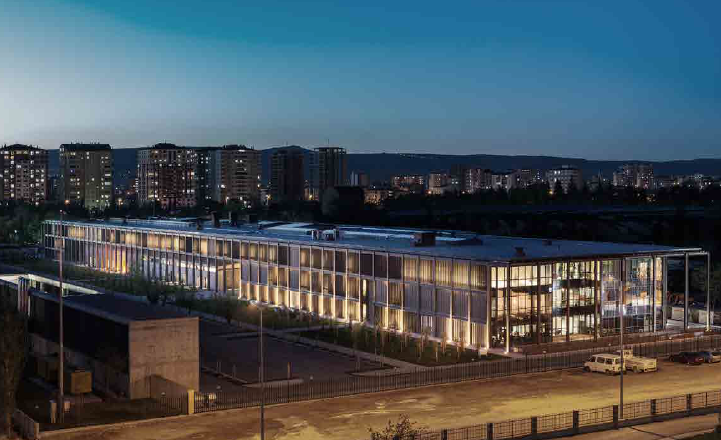
Among the buildings on the site, the small warehouse structure—despite being relatively new and less characteristic—was preserved as an important element to keep the memory of the site alive and was integrated into the new campus. In this framework, the first phase of the new campus—the Educational and Administrative Building—was created through the transformation of this structure and its completion with contemporary additions.
This building, which was required to both carry the multi-layered industrial spirit of the factory campus and accommodate all new functions, was shaped through a design language that takes the columned exterior space of the large warehouse building opposite as a generative reference. The expanded colonnade in the new building not only creates sheltered transition spaces but also contributes to establishing the intended sense of “timelessness” for the overall perception of the campus.
Once a generator of the city’s economic and social life in Kayseri, and therefore holding a strong place in the collective memory of the city, the main goals of the design emerged as transforming this site into a contemporary university campus where modern educational methods are applied, while also reopening a large part of the area to public use.
Content: Tasarım Group
