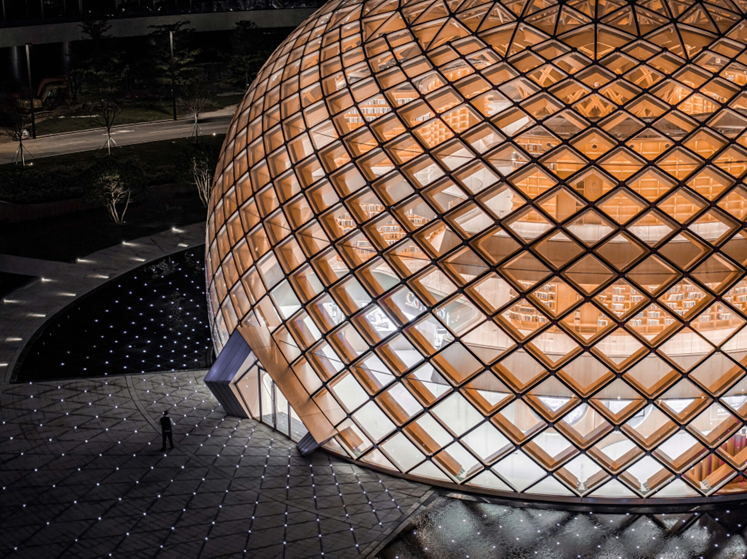



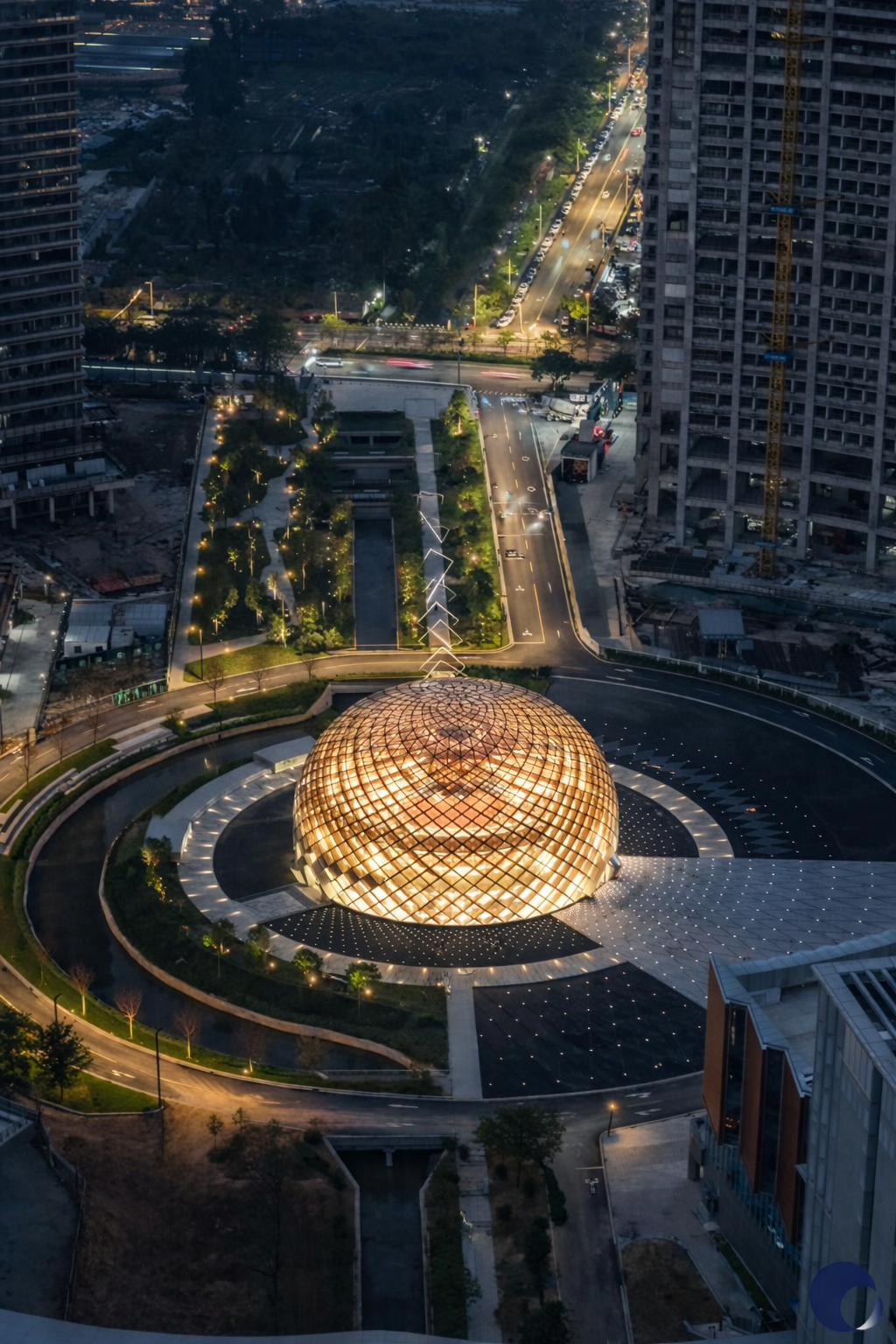
Rising in Huangpu District, Guangzhou’s hub for technology and innovation, the CANNANO Park Exhibition Center transforms the micro-scale precision of nanotechnology into a powerful and iconic architectural expression, emerging as a landmark at the urban scale. Located within the central landscape plaza of CANNANO Park, the structure goes beyond functioning solely as an exhibition space. With its dome form measuring approximately 39 meters in diameter and 21 meters in height, it stands out as a global symbol of technology positioned at the intersection of science, engineering, and architecture.
The architectural identity of the building is defined by two independent yet seamlessly integrated structural systems: a spherical laminated timber (glulam) lattice shell and a primary steel structural framework. This dual-layered strategy delivers high performance in both aesthetic and engineering terms, while simultaneously creating a rich, multi-layered spatial experience.
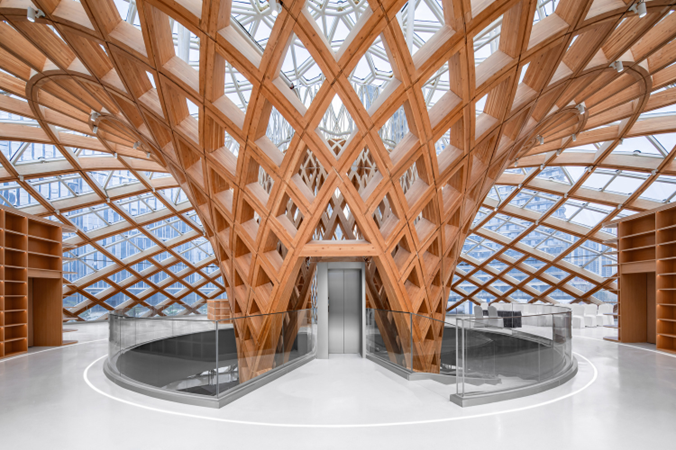
At the core of the design lies the laminated timber lattice shell system, shaped through a strong metaphor inspired by nature. Drawing inspiration from the majestic sequoia tree, the structure rises from a central point at ground level and gradually expands outward as it approaches the top of the glass curtain wall. This movement generates a visually and structurally striking “apple core” silhouette. The rhythmic, repetitive geometry of the timber lattice directly references the ordered, layered, and precise nature of nanotechnology.
The building’s primary functional spaces are supported by an innovative steel frame system that pushes the boundaries of engineering. The vertical structural support is organized around three core tubes, positioned at 120-degree angles to one another. These cores accommodate staircases, service areas, and logistical spaces while simultaneously ensuring the overall stability of the structure. This intelligent structural solution allows the second and third floor slabs to extend outward as cantilevers, creating column-free interiors that appear suspended in space.
The functional organization is layered to reinforce the building’s scientific and public role:
Ground Floor – Exhibition World:
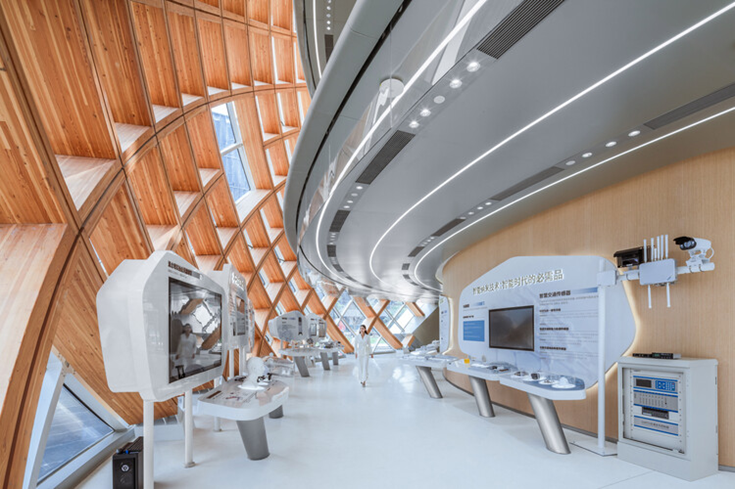
The ground floor welcomes visitors with a broad, fluid exhibition space. Organized into five main sections—Entrance Hall, Innovation, Entrepreneurship, Creativity, and Imagination—the exhibition presents different dimensions of nanotechnology through an interactive and experiential approach. The open-plan layout enables a continuous and uninterrupted circulation experience throughout the exhibition areas.
Second Floor – Academic Exchange:
Dedicated to scientific interaction and knowledge sharing, this level houses academic conference halls, multi-purpose event spaces, and open reading and research areas. Designed to host mid-scale seminars, panels, and scientific gatherings, these spaces strengthen CANNANO Park’s mission of research and education.
Third Floor – Panoramic Vision:
Located at the top of the building, the 360-degree enclosed panoramic platform offers visitors expansive views of both the surrounding park and the broader urban context. Supported by media broadcasting areas, a café bar, and lounge spaces, this level becomes a social meeting point where researchers, academics, and visitors come together. Here, architectural experience merges seamlessly with landscape, views, and social interaction.
In conclusion, the CANNANO Park Exhibition Center stands out as a holistic architectural work that expresses its advanced technological content not only through its exhibitions, but also through its architectural language and structural logic. With its nature-inspired form, innovative engineering solutions, and strong public-space concept, the building transforms the abstract world of nanotechnology into a tangible and experiential architectural narrative.